

In April, I traveled to AM Solar in Oregon (UPDATE: Sadly, AM Solar went out of business June 2024) to install Solar Panels and lithium batteries. AM Solar has a great reputation, so I didn’t mind driving 500 miles to have it done right. Besides, I had lots of family in the area to visit!
Designing the System
The process started months before, discussing my needs with AM Solar and getting their recommendations. This included photos with dimensions so they could make sure everything fit just right.

The folks at AM Solar were great to work with on getting the best setup for my requirements.
After several iterations, I chose to install 400 watts of solar, and 600 amp hours of lithium batteries inside the basement. I chose only 400 watts of solar, even though the roof has room for much more, as I will not be using solar for running the air conditioner. 400 watts is just the right amount to keep the batteries replenished for our residential refrigerator and all our other electrical needs.
600 amp hours of lithium batteries is enough power to run everything for about 4 days, which is great for us if we camp when its raining, or just don’t want to run the generator very often. If we wanted to run the AC, we would need more battery power, but when we need AC, we’ll just run the generator.
For some reason, Newmar includes 2 house batteries under the hood, but also 4 batteries in a slide out compartment. There is plenty of room in the slide out compartment for all six, but that’s the way they made it. Since Lithium batteries do better in a climate controlled environment, my project included rewiring the system to move the batteries to an inside compartment. It turned out there was a perfect place for them in space I couldn’t easily use for anything else!
Benefits
Because I relocated my batteries, I gained a new storage compartment, after I take out the battery tray and wall it in. Since I have a smaller class A, this will be a welcome addition. I think it will be a perfect storage place for the grill, portable propane tanks, and the fire pit!
I also gained a LOT of cargo carrying capacity! The old batteries weighed in at 365 pounds, not including all the extra cabling required to connect the two battery banks. The new batteries are half the weight, at 185 pounds!
The new batteries also provide twice the usable power, and charge several times faster than the old system. When we do need to run the generator, it will add 80 amps of power each hour until the batteries are fully charged. Lead acid batteries accept less and less power as they charge, which makes it almost impossible to fully charge your batteries by the running the generator for just a couple hours.
The new system also includes a bluetooth battery monitoring system. In fact, I have one in each battery, AND I have a separate Victron battery monitoring system. Being able to see the health and state of charge of my batteries from my iPhone adds tremendous value.
All this means I no longer have “battery anxiety” when we dry camp!
Installation
I arrived at AM Solar on a Sunday, and they let me overnight in back of their building. I thought I’d be the only one there, but there was another couple at the front of the building, and there were a couple employees there completing some work from the prior week. They provided 50 amp power and I had a restful night.


In the morning, we went over everything again, and then they took the RV in to start work.
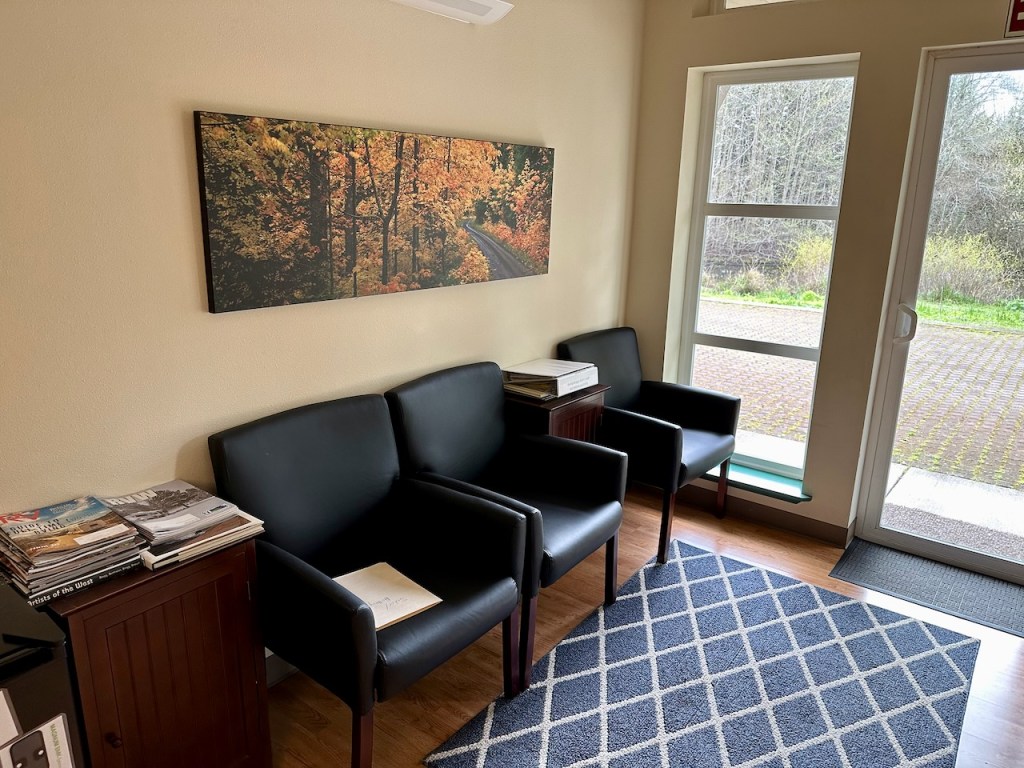
They have a nice waiting room that includes a wall with everything they sell hooked up and ready to demonstrate.

Customers aren’t allowed in the work bays, but they do have a window on the second floor for viewing, so I was able to get a few in progress photos.
Here they are working on cabling and the 2 Rich Solar Mega 200 Watt 12V Solar Panels

Here they have almost completed the project. They left room for a third solar panel, if I want one in the future.

Here’s the electrical bay.
Clockwise from the bottom left is the:
- Victron SmartShunt Battery Monitoring System,
- Victron 50A SmartSolar MPPT 100/50 Controller,
- 2 LifeBlue 300 amp hour Lithium Batteries,
- the breakers are to the right of the batteries,
- then the shut off switches,
- and finally the factory installed Xantrex Freedom XC 2000 watt inverter/charger.

Note how orderly and neat they left the electrical bay. They also replaced the battery combiner under the hood with a version good for lithium, the Victron Cyrix-Li-Ct, and hardwired a Watchdog SurgeGuard into the power cord.
After a quality control check, they sent me off on Thursday morning.
Overall, I was very happy with their work. Everyone was very friendly, they never seemed bothered by questions, and the project was completed ahead of schedule and for a little less than they estimated.
Family
While there, I stayed in a nearby hotel, which actually had a nice view.


However, I loved the time I could spend with my cousin,

…and my aunt and uncle.

Because it was during the week, I missed seeing several relatives, but there’s always next time!
Steering Stabilizer and Four-Corner Weigh
That Thursday I left for Grants Pass, as I had one more project before returning for home.
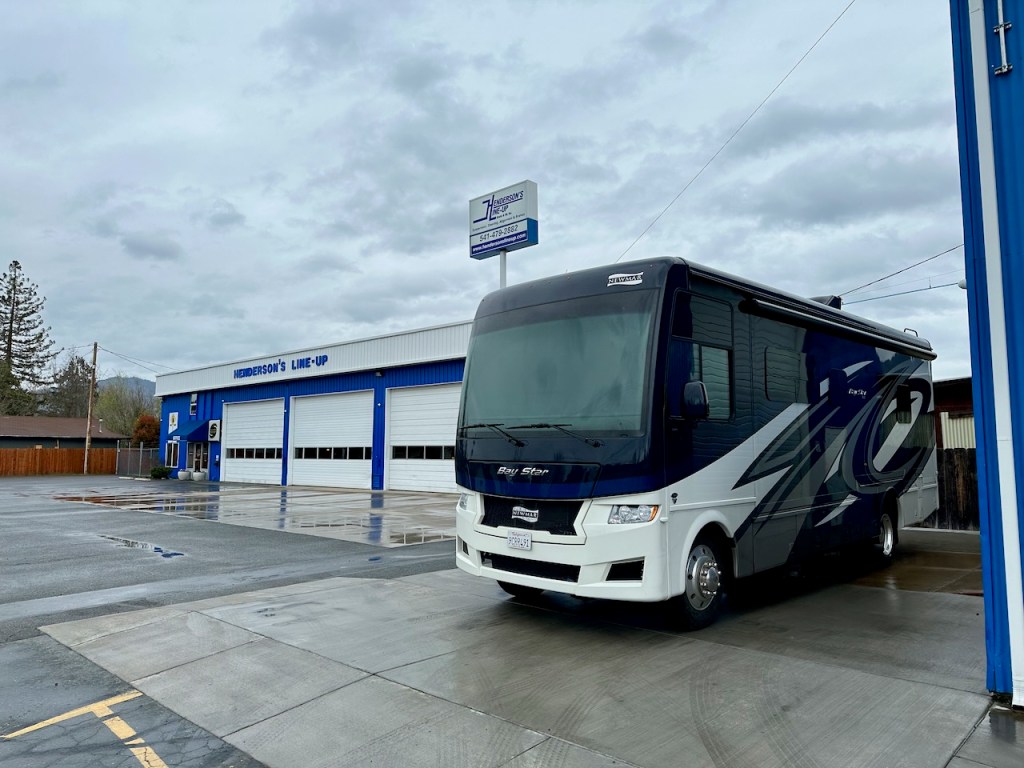
I stopped by Henderson’s Lineup to have them install a Safe-T-Plus steering stabilizer, and get a four-corner weigh of the RV. Safe-T-Plus is a great addition to any motorhome, for the added safety and stability it provides.

The four-corner weight allows me to set the tire pressure accurately for each axle according to manufacturer recommendations. Note this is very different than setting inflation for car tires. Doing this gives you a smoother ride, since you can generally safely lower the tire pressure, and the tires will wear better when inflated properly for the weight they carry.
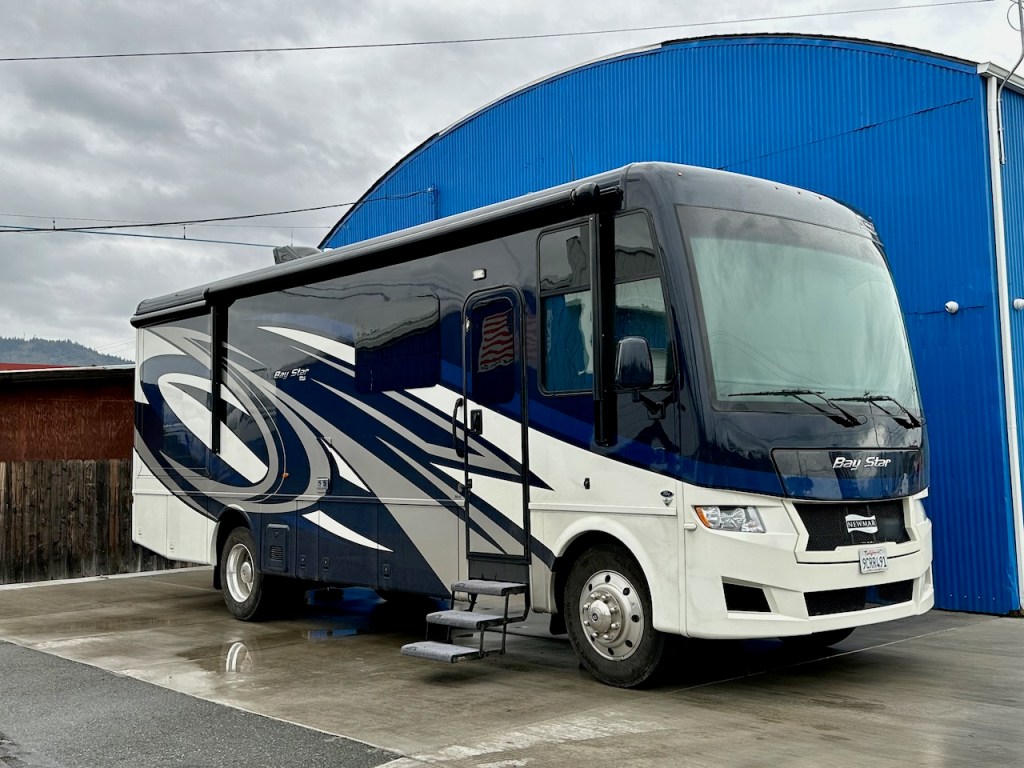
Henderson’s Lineup also allowed me to stay overnight on their property, so I was able to head home early the next morning.
Al & Deb
 MobileMosers.com
Hello,
I have a 2022 3014. Your battery location on that shelf is very concerning to me. I have seen over 160 degrees in that area. Did AM Solar discuss that with you? Did the add any ventilation or pads on that shelf where your battery’s are? I stored a cardboard box in that area. Pulled it out after a long drive and almost burned my had on the box. feel free to call me.
Thanks for the comment! I have a temperature gauge there and so far I haven’t seen an increase, but will continue to monitor. I’m not sure why it would get so hot there. The battery itself will cutoff if temperatures get too high, so I don’t think it’s a safety issue. If it does get hot, I’ll have them install an automatic fan.
That area is above the exhaust, even with the heat shielding. I want to put batteries in that same location, but am very weary of the heat. I would definitely have a temp monitor on the top shelf where the batteries sit, not down where the inverter is.
I’ll keep you posted.
Ok, I just finished driving from North Las Vegas to Bakersfield, about 300 miles in 5 hours, starting at 1pm and ending at 6:10pm.
I drove 60-62 the entire way, but a little slower up the mountain passes and a little faster down.
The weather was warm, in the 90’s most of the trip till I started up the Tehachapi’s then it cooled to about 80.
There was a strong 20+ mph headwind almost the entire drive, which reduced my normal 8.4mpg to 7.4mpg!
I only stopped for a quick restroom break.
Here is the temp data directly from the battery over the catalytic converter. The other battery was generally about 2 degrees cooler.
Start: 90
After 1st hour: 95
After 2nd hour: 99
After 3rd hour: 102
After 4th hour: 106
After 5th hour: 108 (107.8, actually)
It stayed there until I arrived.
It was 107.8 at the top of the Tehachapi and never moved after that. Probably because there was more downhill and it cooled to the low 80’s.
The inside of the compartment started at a little over 90 degrees and went up to about 110 pretty quickly, then went up and down between 110 and 120ish. It went down when going down the passes and up when climbing. I think the strong headwinds contributed to a higher temp, but I wasn’t towing this time, which helped.
So, what I make of this is that the heat shielding under the compartment is helping, but should be improved.
Also, I think the batteries themselves must be insulated pretty well to start so much lower than the compartment it’s sitting on after 5 hours.
I’m thinking I’ll keep the batteries where they are but add additional heat shielding to the bottom of the metal shielding Newmar provides.
A few days later I took the RV on 2 four-hour drives. The battery temp never went above 95.
While I will add additional heat shielding, I really don’t think it will be a problem except maybe under extreme conditions. I’m pretty happy about that!
Good to hear. I’m heading out This Sunday, but only up the coast a few hours. Will report my temps and take a look to see if they installed heat shielding like yours.
How much for the solar project?
All projects are different, due to wiring, etc, so it’s best to get a quote for your specific needs. Most applications my size and complexity are about $10K.
thank you, just needed an idea, when I called them I looked at adding 800 watts of solar and use the 6 6volt batterys until they are no longer usefull. That would run $5,000. that would also set me up for Lithium when replaceing them.
Wishing you the best on your project.