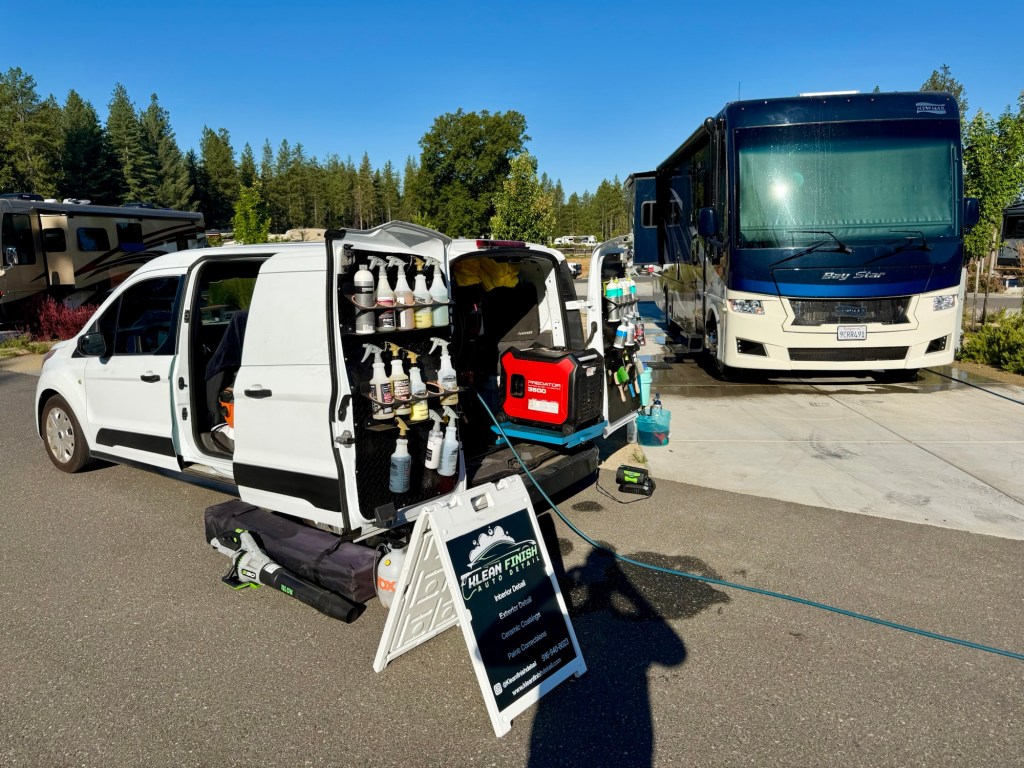
After our last stay under the pine trees, the Big Blue Box really needed a bath! Luckily Klean Finish Auto Detailing was able to fit me in and she cleaned up really nice!
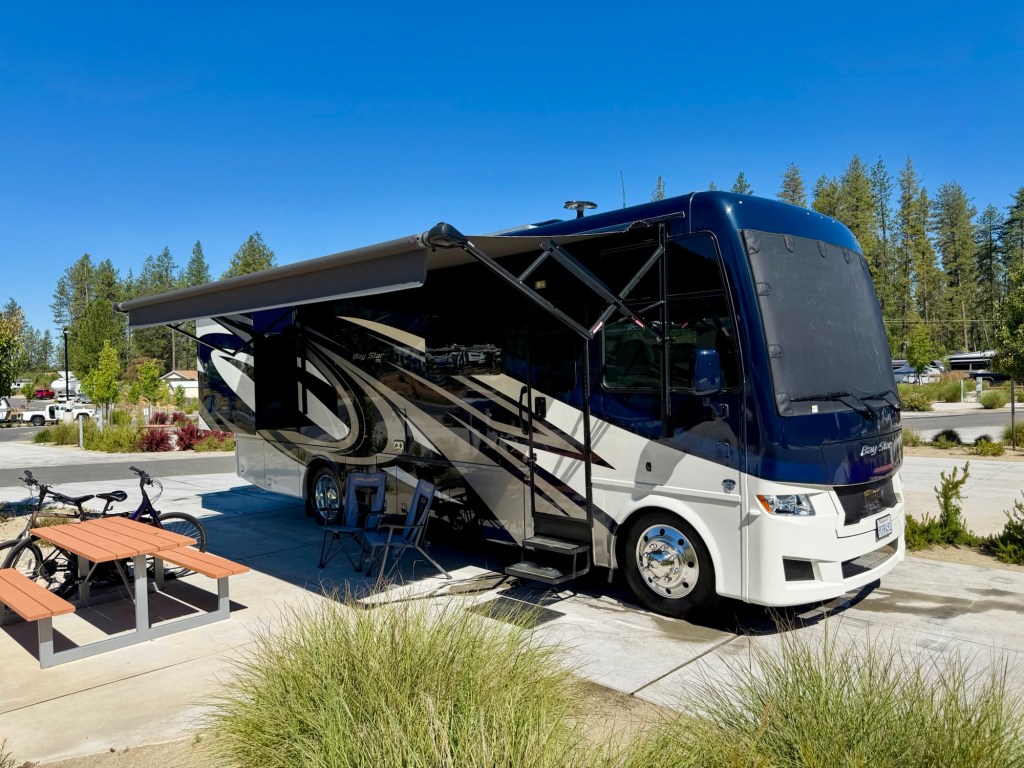
The Grass Valley RV Resort is a modern and well maintained RV park, and we enjoyed our stay.
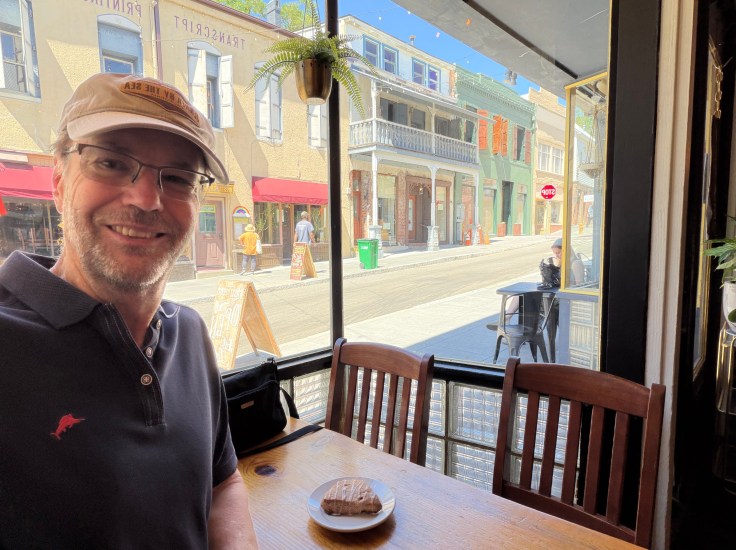
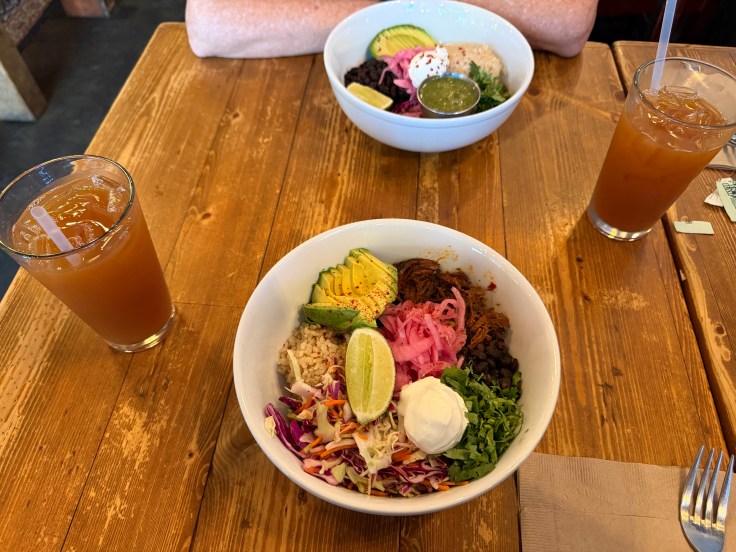
We also enjoyed a local favorite for dinner, Burger and Cream in Grass Valley. In nearby Nevada City, we enjoyed Heartwood Eatery for lunch…
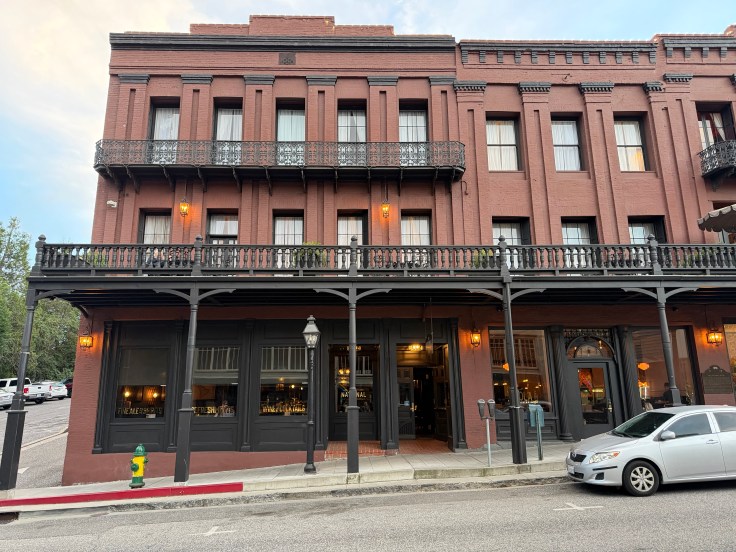
… and had a very nice dinner at The National Exchange Hotel.
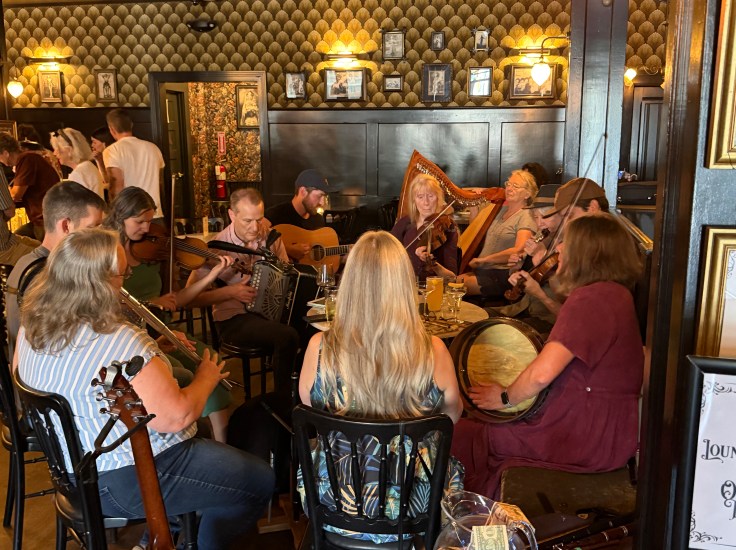
While we were there, a group in the bar was playing traditional Irish music. We particularly enjoyed this because we recently visited Ireland and loved the music.
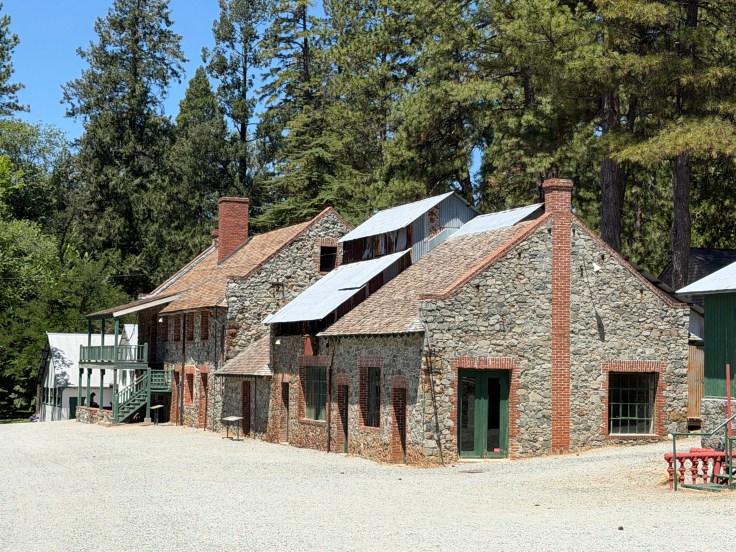
I’ve been wanting to visit here for awhile because Grass Valley has its roots in the Gold Rush era. Established in 1850, the Empire Mine was the most lucrative mine in the state and it has been preserved as a state park.
The state has done a great job preserving sites related to this short but very impactful part of our history, and I’ve found each location to be interesting and unique, like one square of a patchwork quilt.
So I’ll focus this post on the Empire Mine State Park and the close by South Yuba River State Park and share what I’ve learned about the gold mining process, the miners, and mine owners, and some of the impact to the surrounding area.
The Gold Mining Process
The empire mine extracted 6 million ounces of gold, or $23 billion in 2026 dollars. It was done by “hard rock” mining methods (e.g., digging underground into rock), which required a lot of capital and skilled labor. This created wealth and a good standard of living for many people in the area. In fact, even during the Great Depression of the 1930’s, this area prospered. It continued until 1956 when the mine was finally closed.
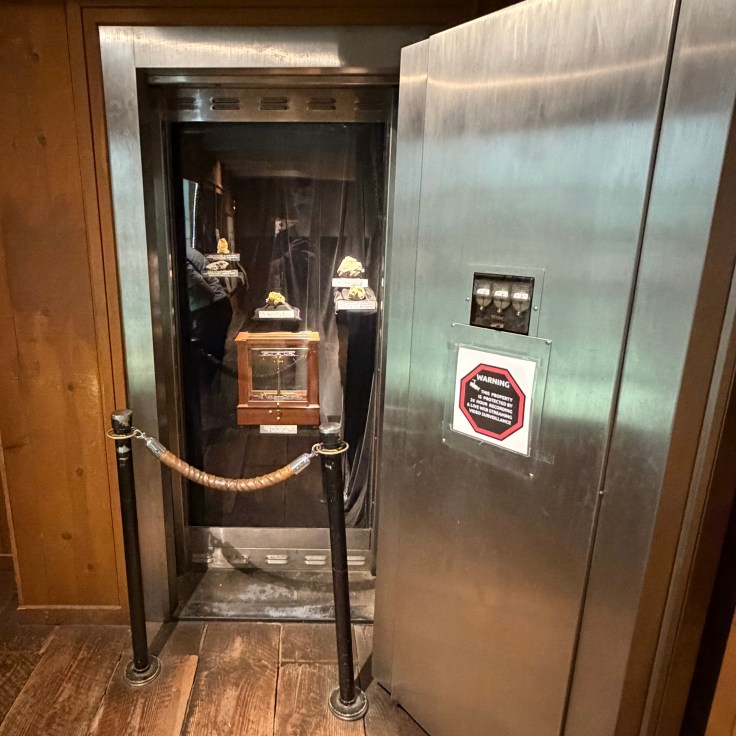
They have some pretty large nuggets on display…glad they have that big vault to hold them!
Empire Mine was known as one of the most efficiently run mines in the country and constantly updated tools and processes.
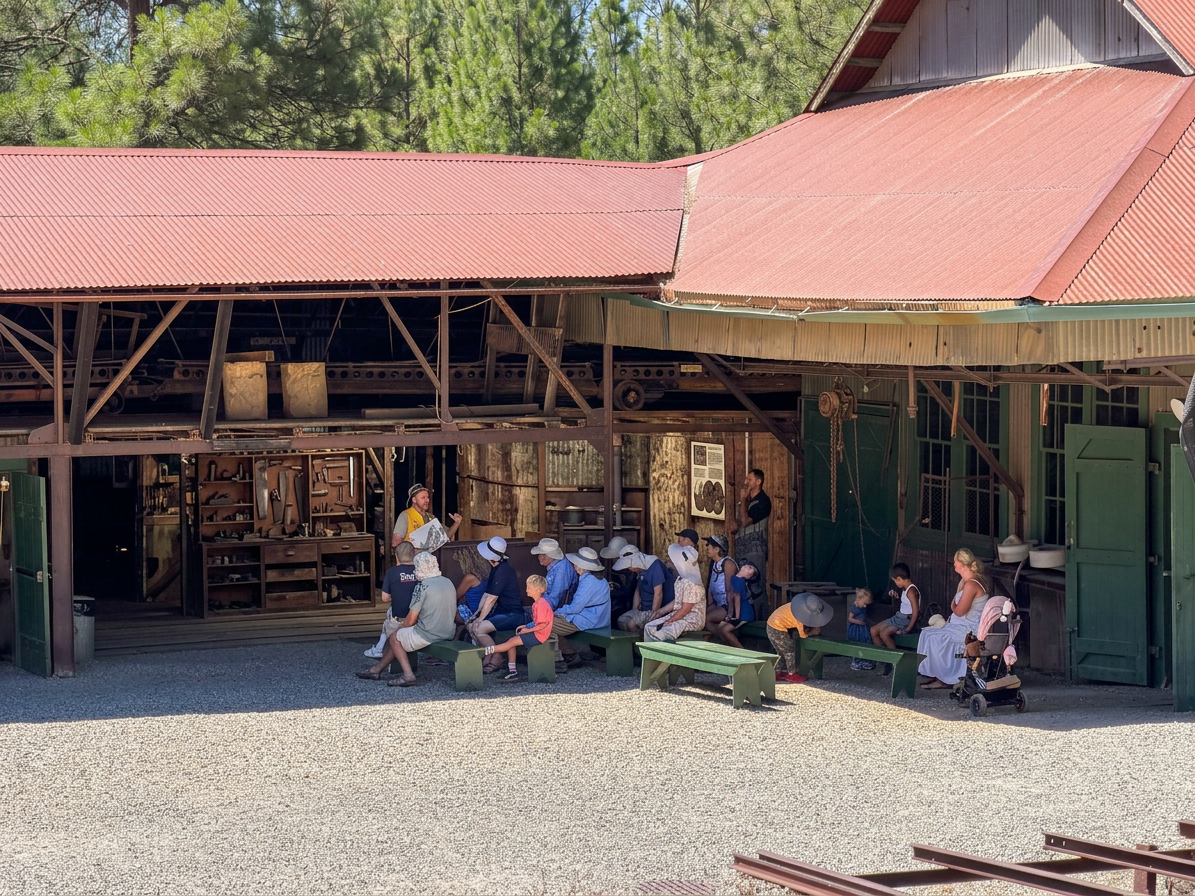
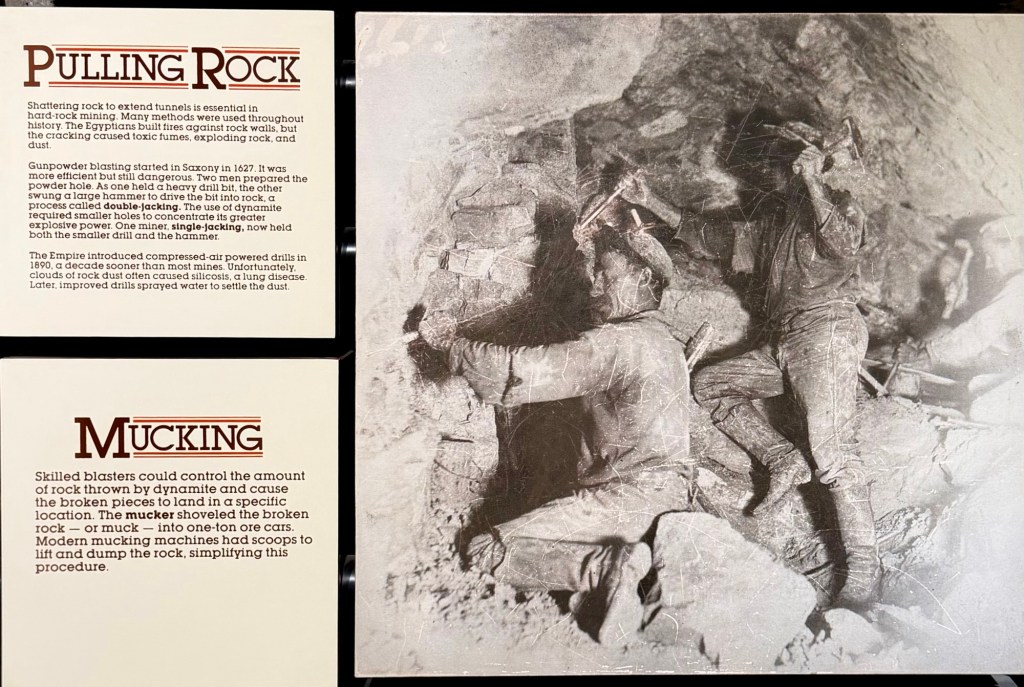
To extract the gold, men were lowered deep into the mine to drill holes, which were filled with black powder and detonated. Hammers were eventually replaced with air-powered jackhammers. Dynamite eventually replaced black powder in 1872.
They loaded (mucked) the blasted rock into ore cars which men pulled to the head frame where it could be lifted to the top for crushing. Later, mules were used to more efficiently move the ore cars. The mules lived in underground barns until they were too old to work.
Large stamp mills ran 24 hours a day to crush the ore. The crushed ore, mixed with water was placed on mercury coated copper plates. The “free” gold formed an amalgam on the plates which was sent directly to the refinery.
In 1905, the mine switched to the more efficient cyanide method. Cyanide was used to dissolve gold while still in the quartz. This method is still used around the world today.
Here’s several pictures that display the process. Just click to see a full version.
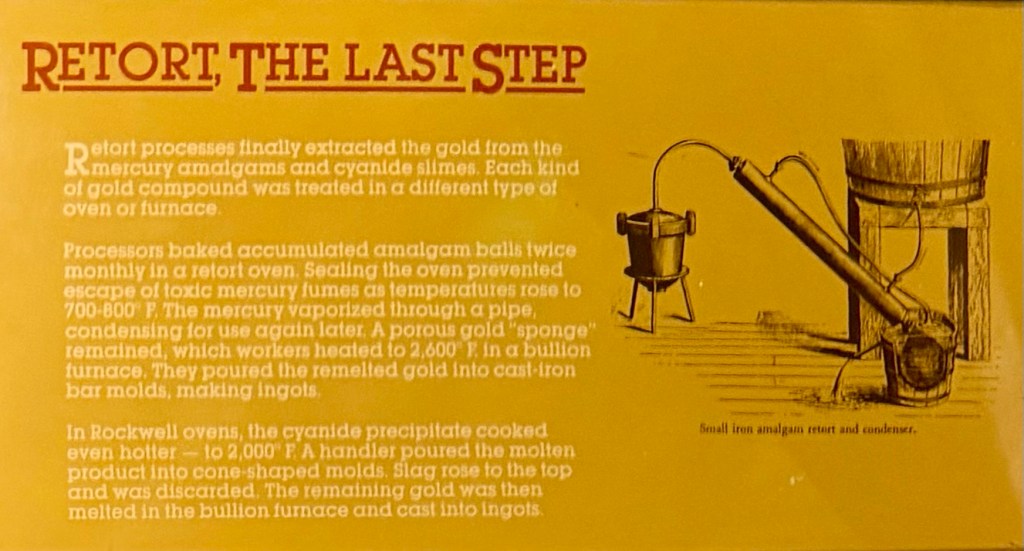
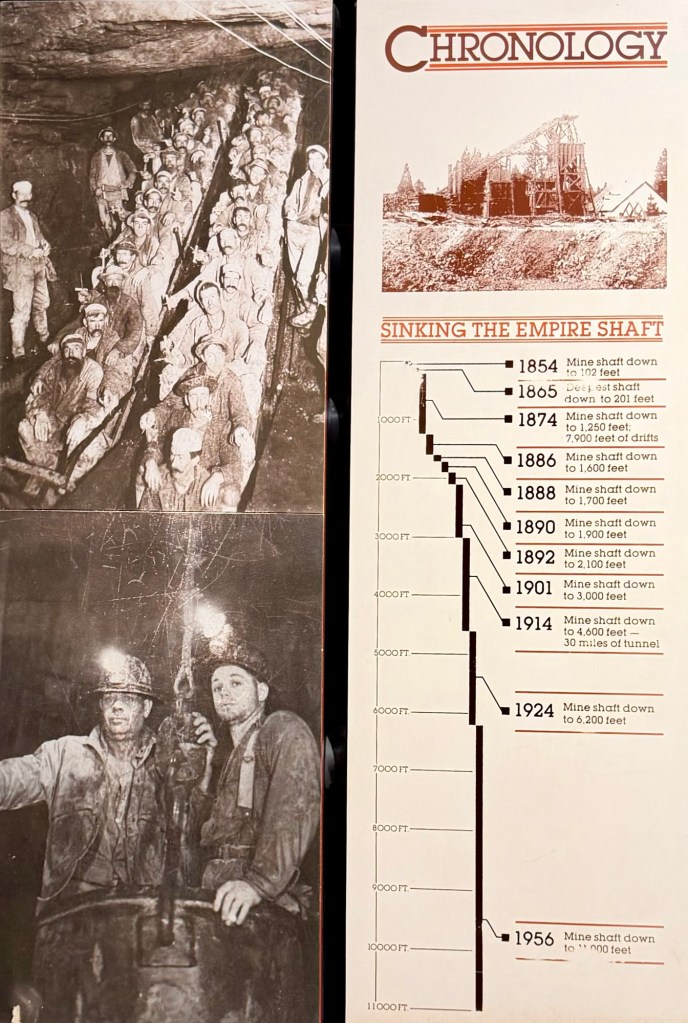
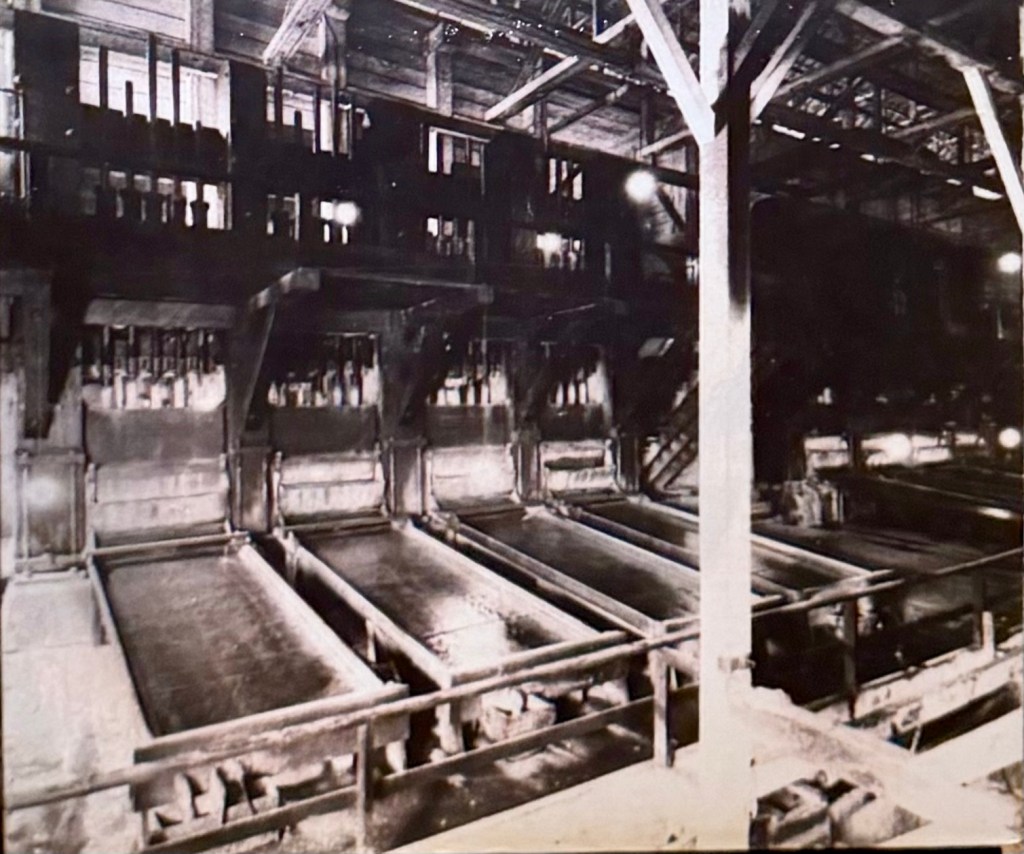
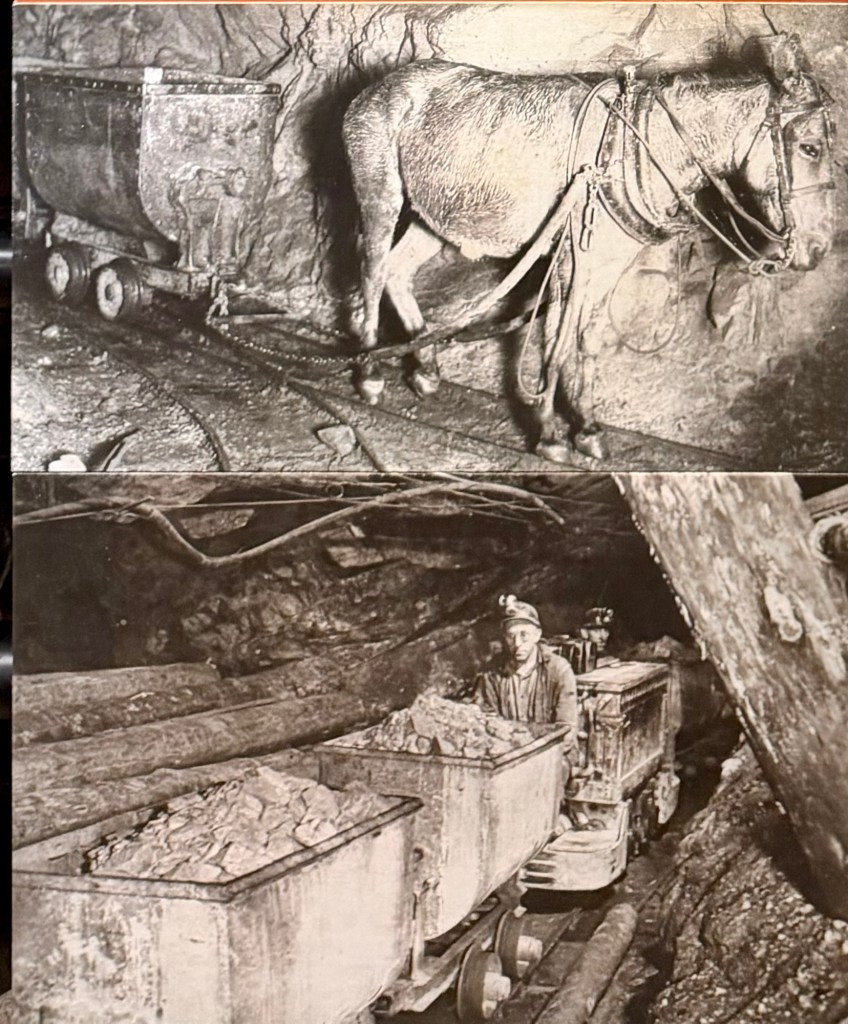
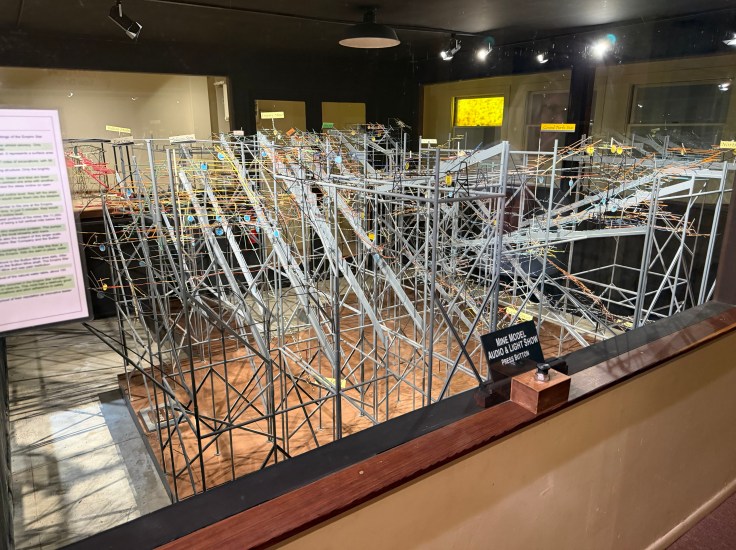
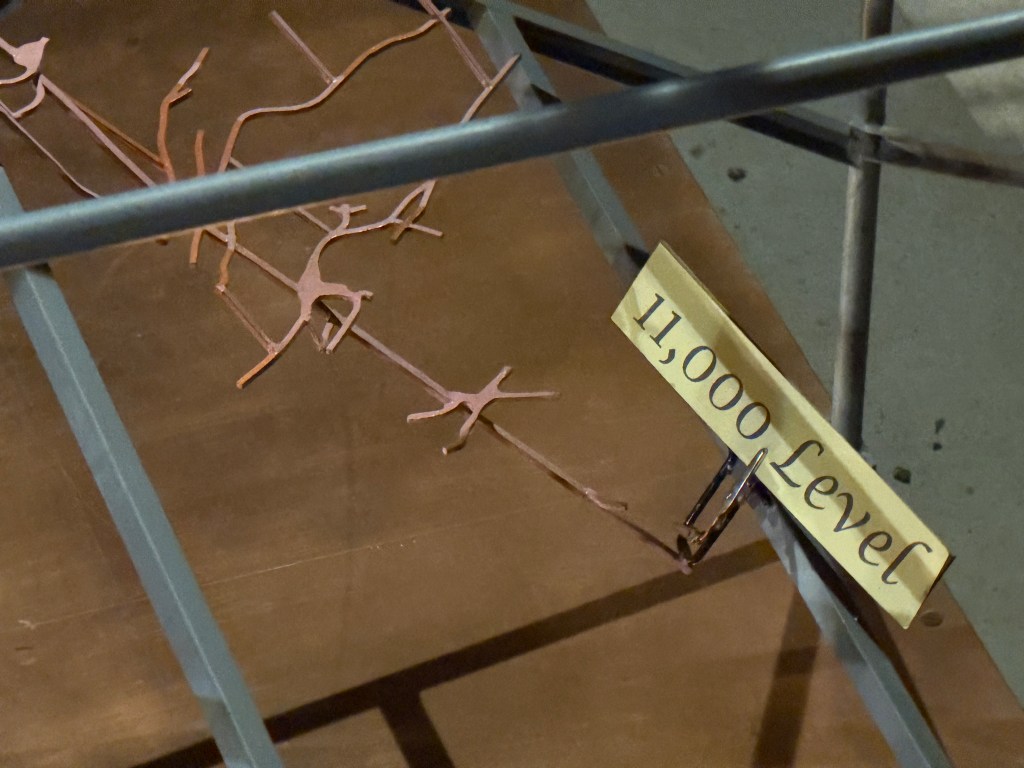
By 1956, the mines sank over 2 miles in depth, 367 MILES of excavations, and 56 shafts. Water intrusion was a constant problem, and they pumped out 2,100 gallons per minute at the surface, swelling the local streams. In fact, all the shafts are now filled with water below the water table at 150 feet.
To keep track of it all, the mine made this model and access was limited to only a few people. The detail is incredible.
Empire mines had a good reputation for safety and stewardship, given the standards of the time. A very different story than the “placer” mines nearby. Both the miners and owners were proud of their record and accomplishment.
The Miners
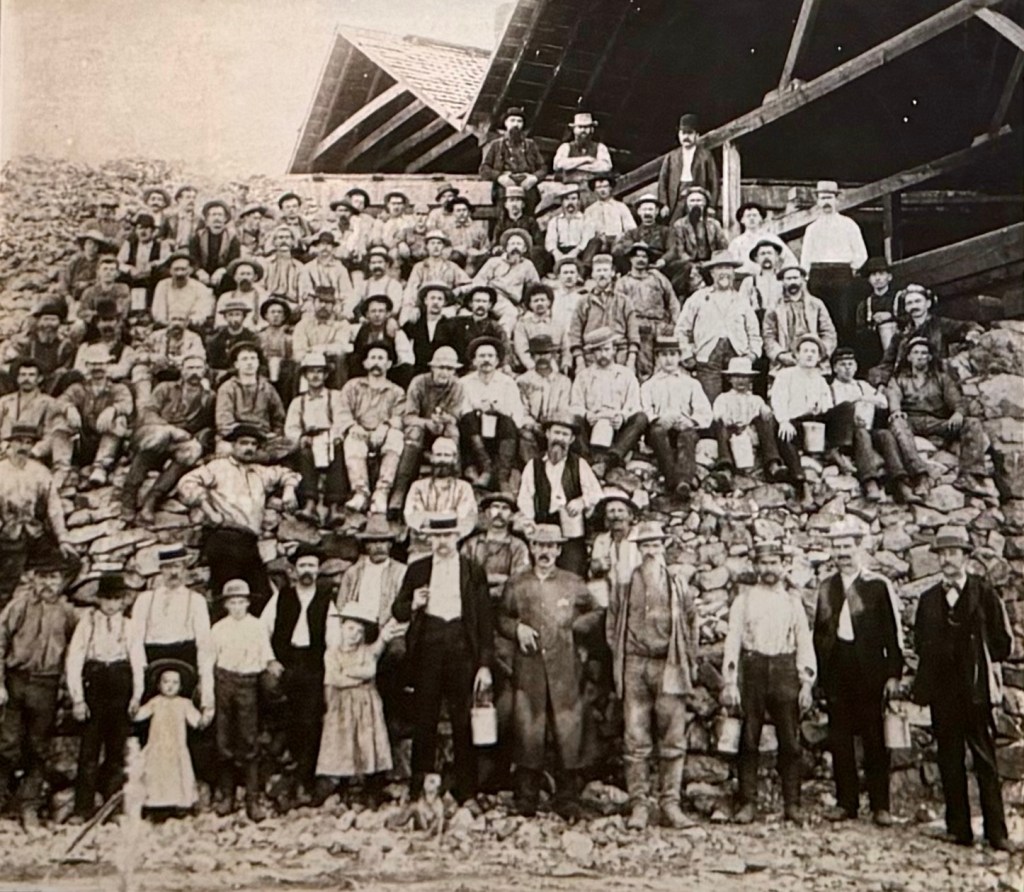
Most of the miners were Cornish, arriving in the early 1850’s from Cornwall England. They brought with them a serious work ethic and over 1,000 years history of hard rock mining. For instance, they used Cornish pumps to keep the wells dry.
There were enough Cornish immigrants that they were able to maintain strong communities around Grass Valley.
The church was usually their first public structure. A legendary love for music and literature was expressed in church choir preparation and Bible study. Miners often sang hymns as they rode the skips.
The Cornish were less politically active than the Irish, but were attracted to fraternal groups, such as the Elk and Odd Fellows Lodge. Miners joined the union but emphasized its social and benevolent roles.
At one time, Grass Valley and Nevada City resembled towns in Cornwall, with their frame cottages, sturdy stone buildings, and tidy gardens and streets.
Even today, there is a business selling the Cornish pasty, a lunch staple for the miners.
The Mine Owners
William Bourne (no relation to Jason Bourne) left the mine to his son William Bourne II, and his investments and hiring led to a long period of property for Empire Mine. He made his fortunes here and in leading the development of San Francisco’s gas and water supply lines, and created thousands of jobs for the surrounding area.
He owned properties in San Francisco, Woodside, St. Helena, and, of course Grass Valley. He developed Woodside for his retirement as his “place to grow young”. He called it Filoli, and acronym for “Fight for a just cause, Love your fellow man, and Live a good life”. That’s a great motto! Sadly he died before he could fully enjoy the property and lived most of his last days on the second floor due to his illness. Good reminder to retire as early as you are able to!
I love that he located his Grass Valley property right on the site of the noisy mine. From his home there, you could hear the stamp mills pound 24 hours a day. I like to think that he heard it as the sound of money. His wife, on the other hand, did not like the noise and didn’t visit very often.
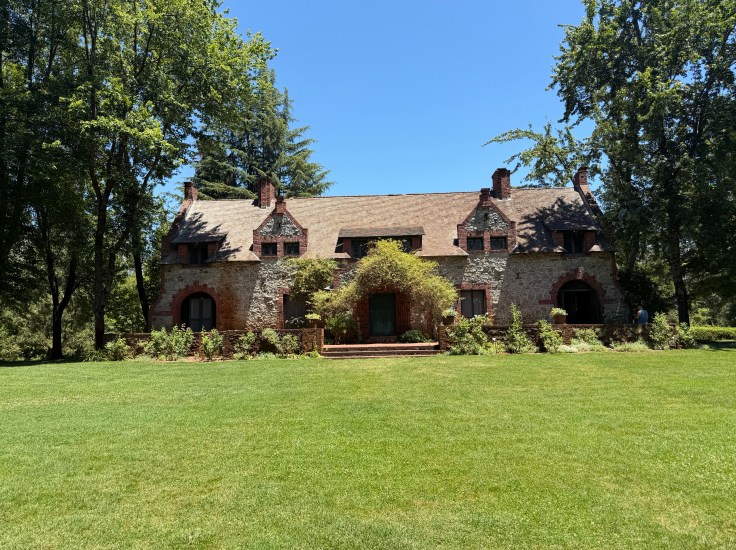
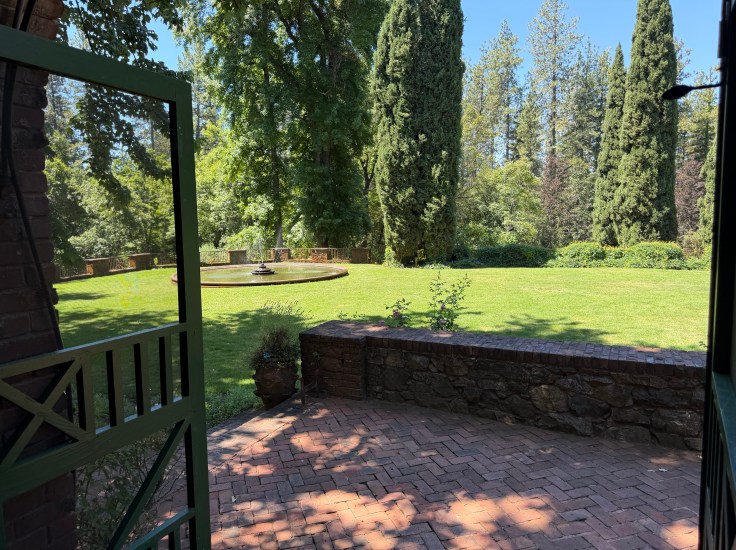
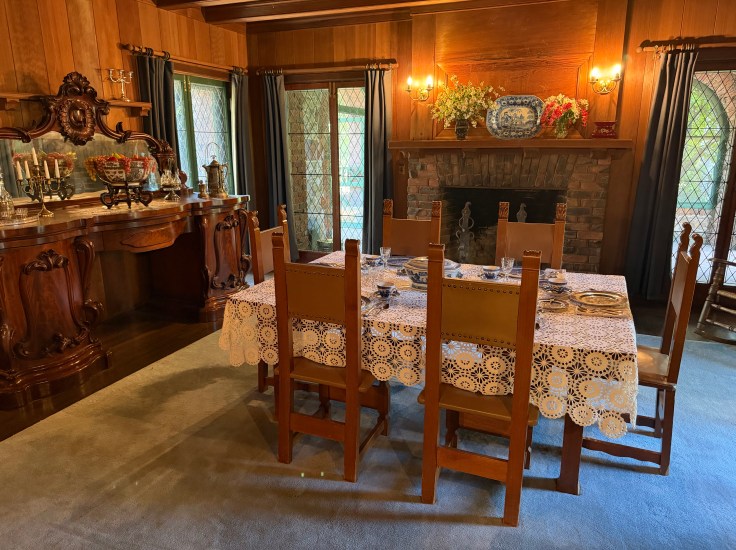
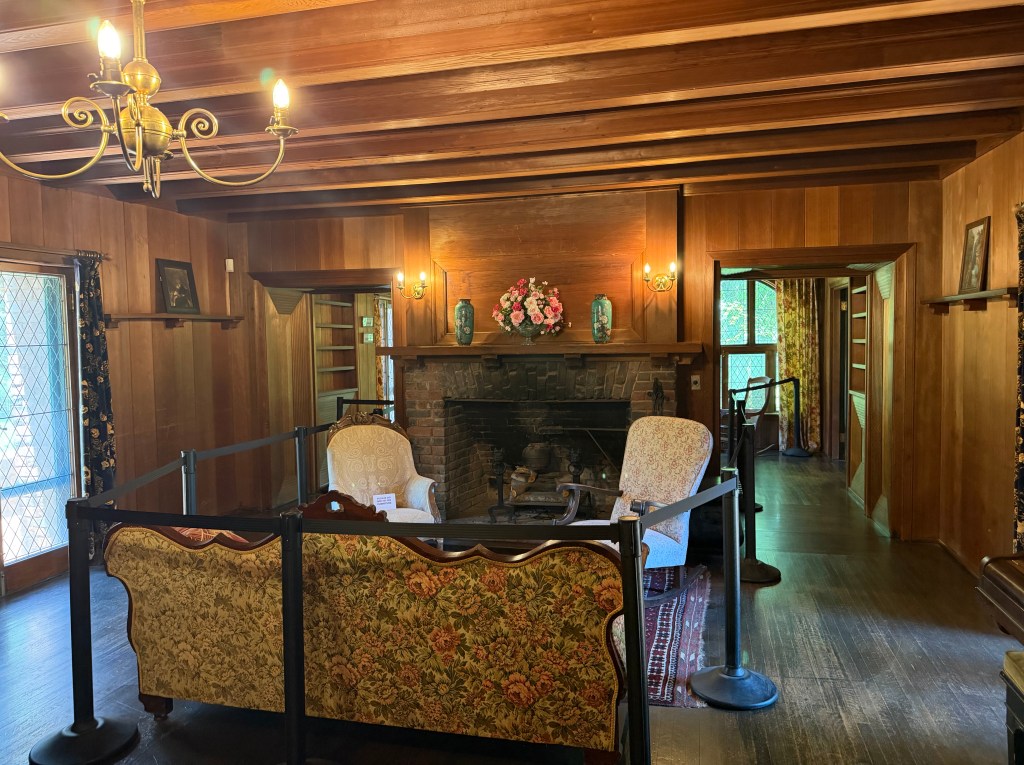
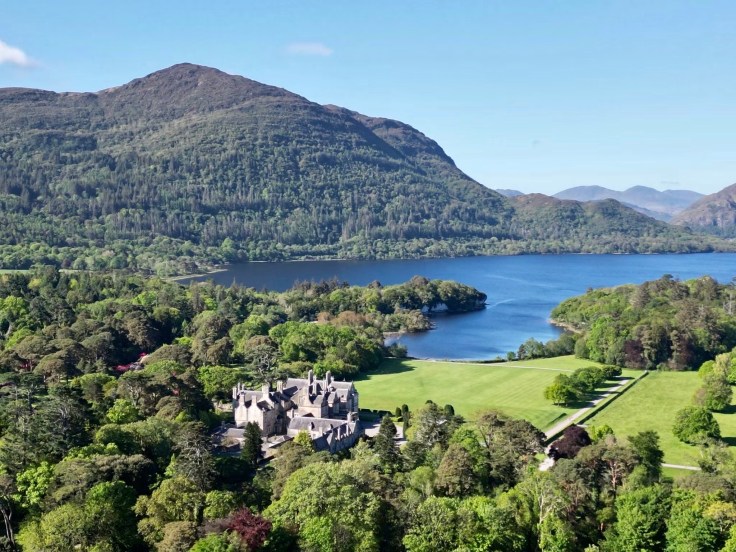
Their daughter Maude married an Irishman, and their wedding gift to her was Muckross, and 11,000 acre estate at the Lake of Killarney, Ireland. Sadly, she died from TB only a few years later and they gave the property to the state on the condition that it could be enjoyed by the people of Ireland forever. On a recent trip to Ireland, we were able to visit Muckross and it’s as beautiful as the photo.
Outside the Mining Community
Except for hard rock mining, the gold fever didn’t last very long in California, a decade or so, though the impacts are felt even now.
Trees were felled for construction and firewood. These open fields were planted with apple trees which we benefit from 150 years later. A trip to “Apple Hill” is well worth it in the Fall.
The great influx of miners disrupted the current population, including Native Americans. However, you can visit several Indian Casinos in the area to this day.
Placer mining with huge water cannons left its mark on the landscape and polluted some rivers to this day.
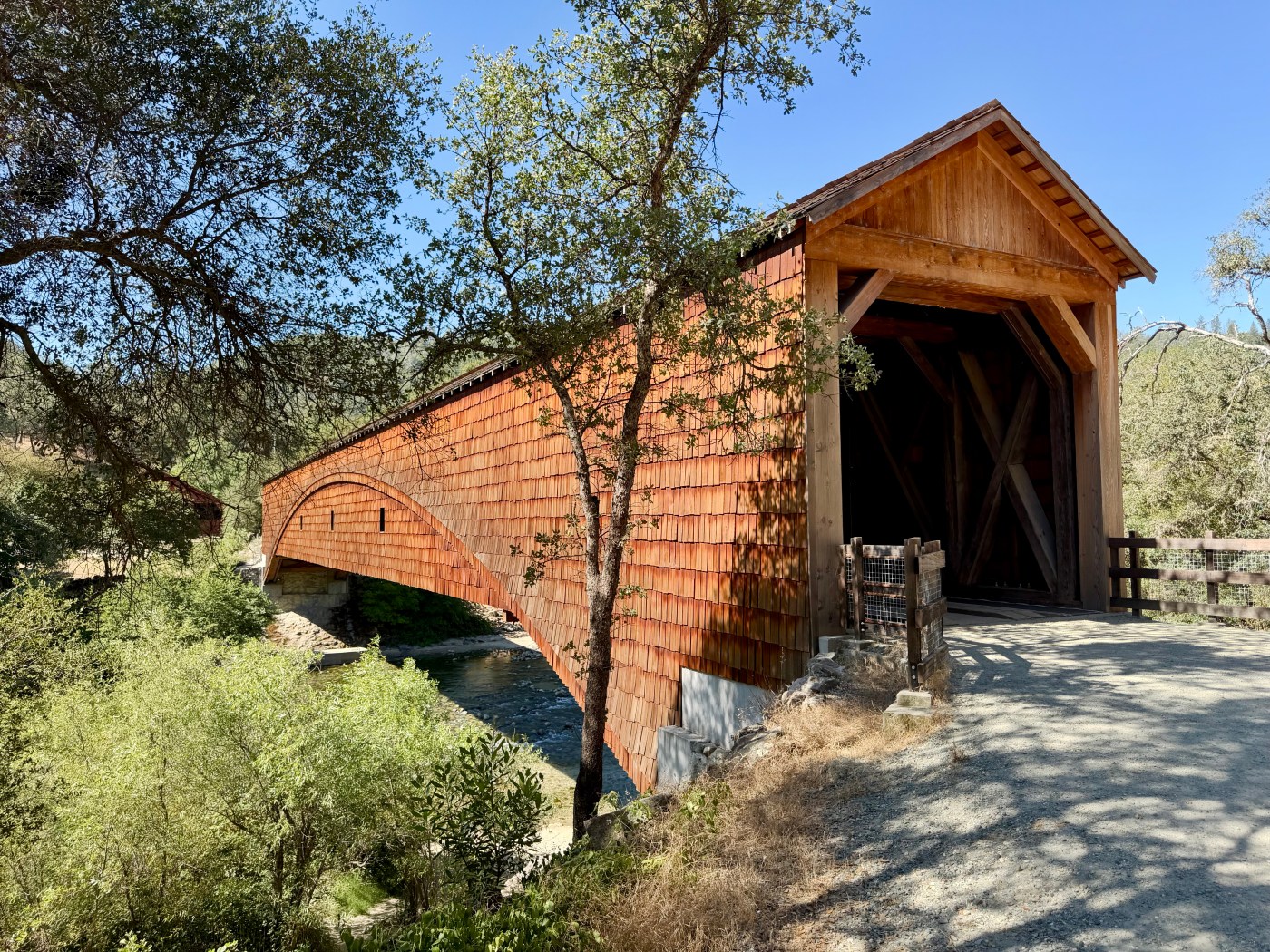
The South Yuba River State Park is a good example. This was a sleepy river crossing by ferry before the Gold Rush. With all the new traffic, the enterprising owner built a covered bridge and charged for anyone wanting to cross. It’s the “pick and shovel” business that really made a killing during the Gold Rush.
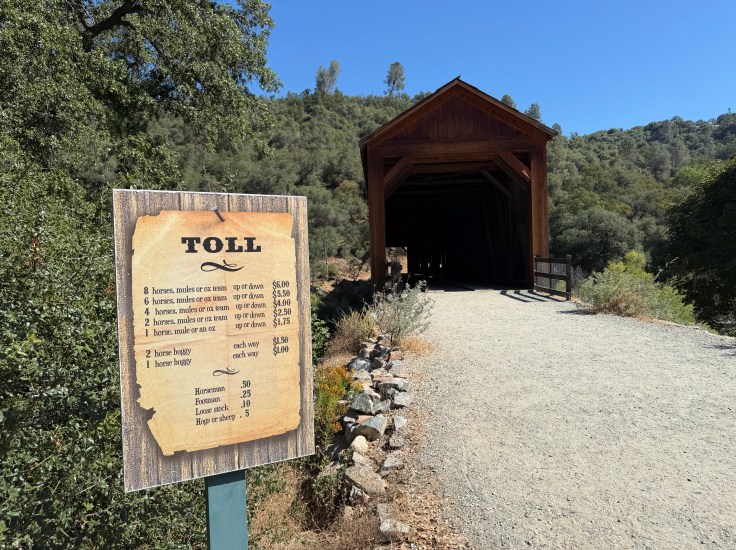
Interestingly, per the monument beside the bridge, this is the longest single span covered bridge in existence!
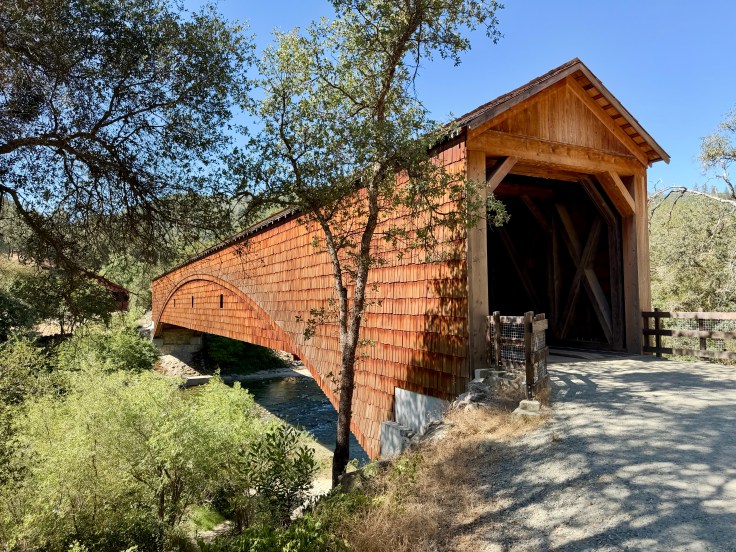
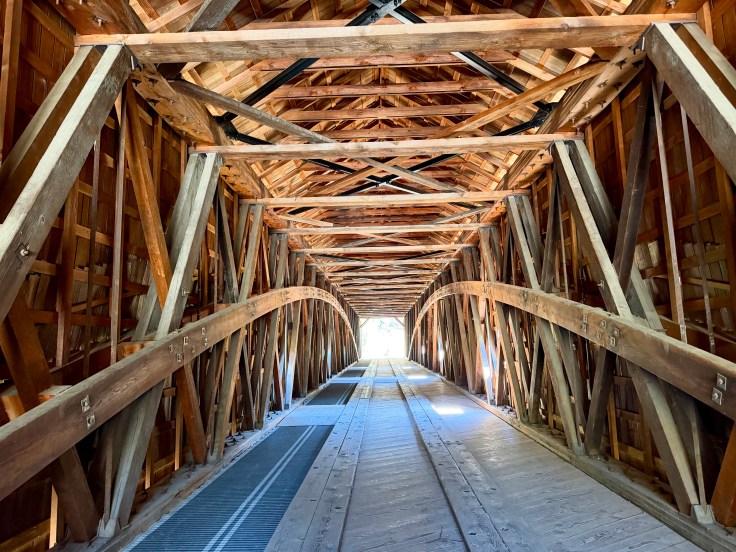
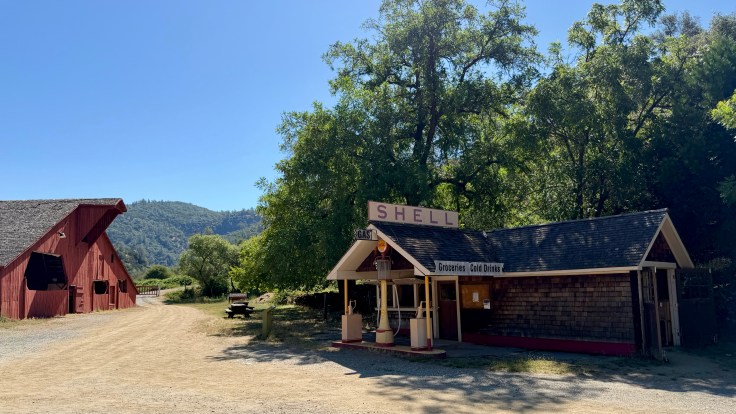
Later, a family made a wonderful retreat here where people could enjoy the river and beautiful countryside. However, the resort had to close after placer mining water cannons sent great quantities of water and silt downstream, disrupting the river and killing the fish. Problems like this increased exponentially until the State stepped in and put controls on the mining companies. Not an easy thing to do in a state just made rich from mining.
This is why I love visiting the Gold Rush sites. While touring the sites, It’s easy to imagine how all the various groups coped with the changes. It also helps me better appreciate both the gifts and the legacy issues these pioneers left to us. This is the kind of history we need to preserve and continue to learn from.
So that was our visit to Grass Valley. We thoroughly enjoyed our time there and want to return again in the next year.
Al & Deb


Excellent post, I use to go to Grass valley When I lived in Reno NV in the 90’s.
Mel